
Kona 2026: Why Is Women’s Performance Still So Unpredictable?
What did the dramatic IRONMAN World Championships in Kona reveal about race strategy and the limits of the human body?
In an era of advanced performance diagnostics, we understand energy systems and can measure the metabolic demands of intensities. So why do we still watch races featuring the world’s best female endurance athletes turn into battles for survival?
This year’s Kona really got me thinking.
As a former amateur and professional triathlete who has raced twice on this legendary island, I know very well just how unforgiving the Hawaiian conditions can be.
However today, I also look at these races through the eyes of a coach and a specialist in female physiology and performance diagnostics.
And I have to admit, there were moments when I found myself asking:
Can’t we prepare female athletes better?
Paula Findlay: Over-Biked or Under-Fueled?
“Maybe over-biked or under-fueled, mistakes you cannot make in conditions like this.”
This is how Paula Findlay described her difficult day in Kona, in her social media.
I have to admit, her statement really caught my attention.
How is it possible that, at the absolute highest level of our sport, we are still talking about incorrect pacing or insufficient fueling as possible causes of such a dramatic performance breakdown?
What strikes me even more is why, even at the elite level, the question can remain unanswered after the race: Was it the chosen intensity, insufficient energy availability, or a combination of both?
Today, metabolic diagnostics allow us to estimate how much energy an athlete requires at a given intensity, what proportion of that energy comes from carbohydrates, and how these demands change as intensity increases.
An athlete should know not only the target power output but also have a clearly defined nutrition strategy. Her carbohydrate intake and hydration should be tested, with alternative strategies prepared for situations when conditions change or her physiological response differs from what was expected.
Pacing and fueling go hand in hand. You can’t get one right without considering the other.
Of course, I don’t know Paula’s race plan. We cannot conclude from her statement that she was unprepared.
Even the most advanced diagnostics cannot predict everything that might happen over eight-nine hours of racing in extreme conditions.
But that is precisely why preparation should never end with just one ideal scenario.
Laura Philipp: Sticking to Her Race Plan
Laura Philipp’s race has a very different story.
After the swim, she was approximately 8,5 minutes behind the fastest woman due to seasickness. Despite the huge deficit for her, she gradually turned her race around and delivered an exceptionally strong overall performance.
For me, her performance shows one of the most important principles of long-distance triathlon:
Race according to your own strategy, not according to your competitors. And always have at least two strategies prepared.
When you are significantly behind, the temptation to chase every athlete in front of you is huge.
But going too hard on the bike can come at a very high price during the marathon.
Laura confirmed this in her post-race interview and showed just how important the overall result is, rather than performance in any single discipline.
Her decision-making, patience, and excellent execution of her own race strategy, despite a particularly difficult swim, ultimately brought her to second place at the Ironman World Championships.
And then there were other dramatic stories.
Lucy Charles-Barclay once again demonstrated her dominance in the swim but was unable to finish the race..
And watching last year’s champion, Solveig Løvseth, collapse just 1 km from the finish line, when she was so close to winning her second world title, showed us how quickly determination can turn into dangerous exhaustion, and how everything can be lost in the final moments.
Seeing this forces us to ask whether extreme suffering is simply an unavoidable part of IRONMAN racing, or whether better preparation could help reduce at least some of these risks.
Why Is Knowing Your Power Output Not Enough?
Today, we have access to technologies that athletes could only have dreamed of twenty years ago.
We can measure oxygen consumption, monitor lactate accumulations, analyse fat and carbohydrate utilisation, and estimate the energy demands of exercise at different intensities and under different conditions.
All of this helps us answer some fundamental questions:
How much energy does a particular power output or pace cost me?
What intensity can I realistically sustain over a long period?
How many carbohydrates do I need to consume, and how much can my gastrointestinal system actually tolerate, especially under specific environmental conditions?
Because, for example, 200 watts is not just a number on a bike computer. It represents a specific physiological load with a real metabolic cost.
And the longer the race, the more significant every decision becomes.
But here is a thing.. Even when we know all these numbers, there is still another important variable to consider.
The female body.
Female Physiology: What If Your Body Doesn’t Respond the Same Way Every Day?
Throughout the menstrual cycle, estrogen and progesterone levels fluctuate.
These hormones influence several physiological processes, including body temperature regulation and digestion.
For example, after ovulation, during the second half of the menstrual cycle (the luteal phase), progesterone levels rise, typically accompanied by a slight increase in resting body temperature.
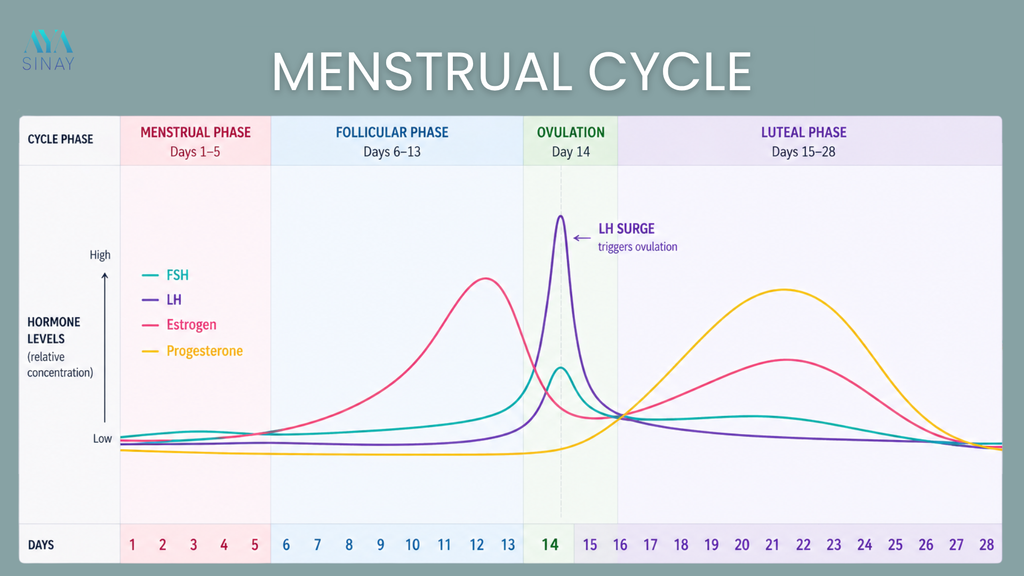
Now imagine an athlete racing in Kona’s extreme heat and humidity during this phase.
She may have a perfectly structured pacing and nutrition strategy, yet her physiological response to exercise may not be identical to what she experienced during training on other days.
For some women, sleep quality, perceived exertion, and gastrointestinal comfort may also fluctuate throughout the cycle.
This does not mean there is one universally “good” or “bad” phase of the menstrual cycle for racing. Scientific evidence does not support such a universal classification.
What we need is a deeper understanding of each woman’s individual physiological responses.
We need to monitor them over time, understand them, and, where relevant, incorporate them into training and race preparation.
Even when you know your numbers, your body may not respond the same way every single day.
And this brings me to what I consider THE TRUE ART of endurance racing.
Plan A, B, C… and Above All, the Ability to Listen to Your Body
During one of my Kona races, I learned the hard way what happens when fueling goes wrong.
I made a huge mistake, I had missed an energy gel at its scheduled time and tried to make up for it.
But my stomach could no longer tolerate the gels.
I experienced diarrhoea, stomach pain, and nausea, to the point where I felt like vomiting.
My original fueling strategy had completely stopped working.
I had to react.
I switched to Coca-Cola, hoping it would settle my stomach while also providing a source of carbohydrates, and adjusted my pace according to what my body could handle at that moment.
And this was back in 2013! Just imagine how far sports science has progressed since then.
It was far from an ideal solution.
But it allowed me to adapt, switch to Plan B, and finish the race in 10 hours and 23 minutes.

Having a Plan B is part of a well-prepared race strategy.
And this is exactly how I believe we should approach long-distance triathlon preparation.
It is not enough to know what I will do when I feel great.
I also need to know what I will do when I start overheating, when my body stops tolerating nutrition, or when my physiological response is different from what I expected.
These scenarios need to be considered in advance, tested in training, and, whenever possible, rehearsed in conditions similar to those expected on race day.
And just as importantly, an athlete must be able to recognise the moment when it is no longer about adjusting a race strategy, but about protecting their health and safety.
So, What Did Kona Really Teach Us?
That IRONMAN is about how the whole body works together – COMPLEX SYSTEM, such as:
training, metabolism, nutrition, recovery, psychology, health, and, in women, individual physiological considerations.
After years of racing as both an amateur and a professional athlete, and now working with a deeply individualised approach to human performance, I am convinced that an athlete’s greatest advantage is not simply having impressive numbers on paper, but understanding their body and knowing how to work with it on the day that matters most.
This is exactly the principle on which I build my work with clients.
Because training is only one piece of the puzzle.
True performance happens when all the pieces work together in TUNE.
Being truly prepared does not mean having a perfect plan for a perfect day.
It means knowing what to do when the perfect day doesn’t happen.
“Train in Tune with Your Body. Not Against It.”
Aya Sinay
High-Performance Coach & Longevity Consultant
World Triathlon Coach Educator | Performance Diagnostics Specialist